How to Make and Manage a Garden with Eczema (Part 2)

Welcome back to part two of my journey on finally working on my front and back yard while suffering from eczema on my hands and feet.

I’m sorry for the long delay, COVID-19 has caused many delays and I will try to plan out content more efficiently.

As I mentioned in my last post, gardening for me is not as easy as it seems due to my garden beds needing consistent management. However, I was super excited to start an herb garden and I realized it was time to tackle the monster that is my garden beds.

Again, my eczema never fully goes away, so this is a continuing challenge for me, but I’m not going to let my eczema stop my goal of having an herb garden this summer, and neither should you, which is why I wanted to create this mini-series!

I bought my herbs from my local garden center and started on my back yard garden beds. I followed the same protocols I did for the front yard. If you haven’t read part one you can catch up here.

I recommend taking your time weeding if you have eczema. It’s okay if it even takes a few days. It is better to prioritize your body and condition over some pesky weeds.

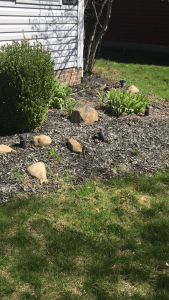
Here is what by back beds looked like before I weeded:

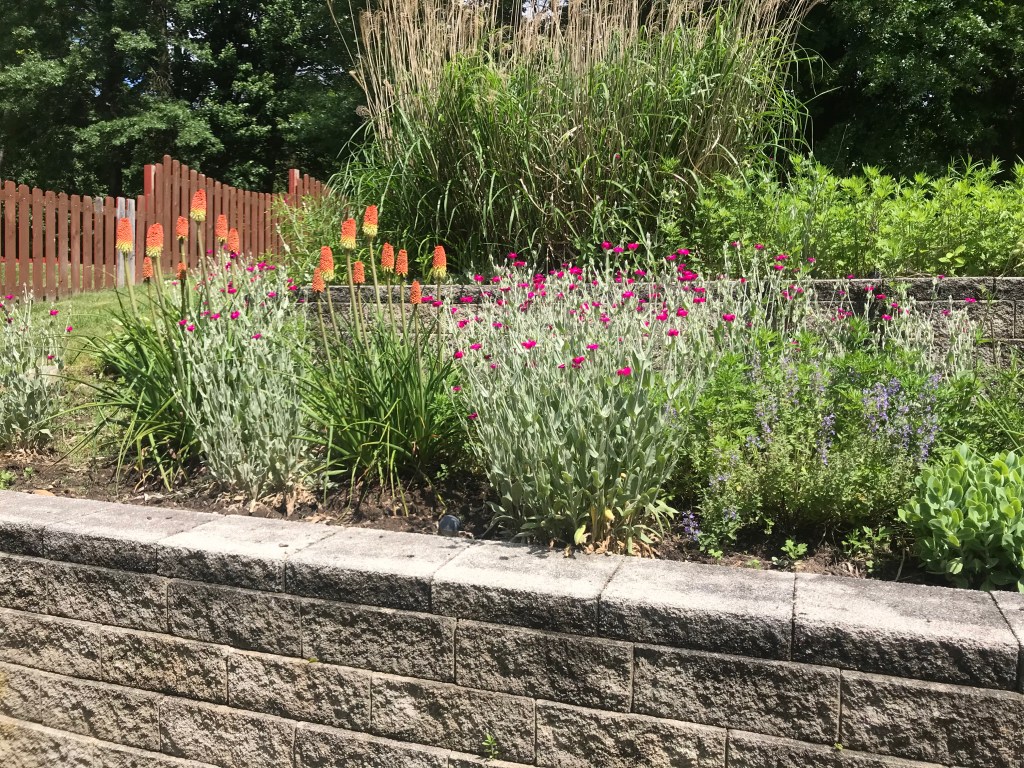
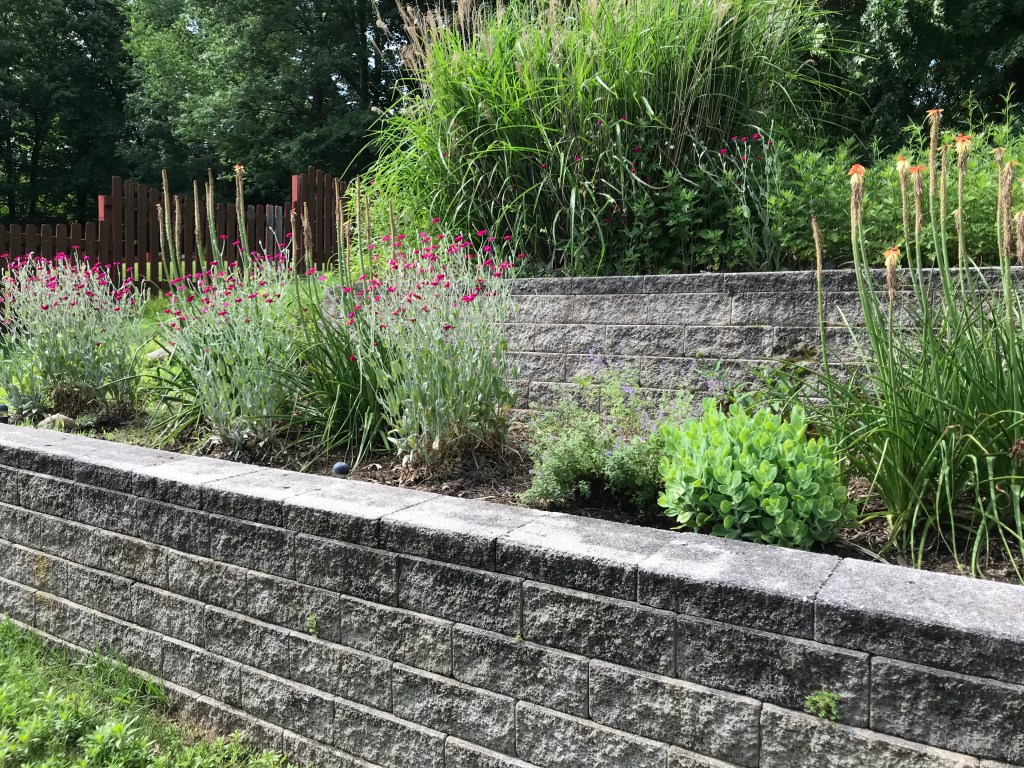
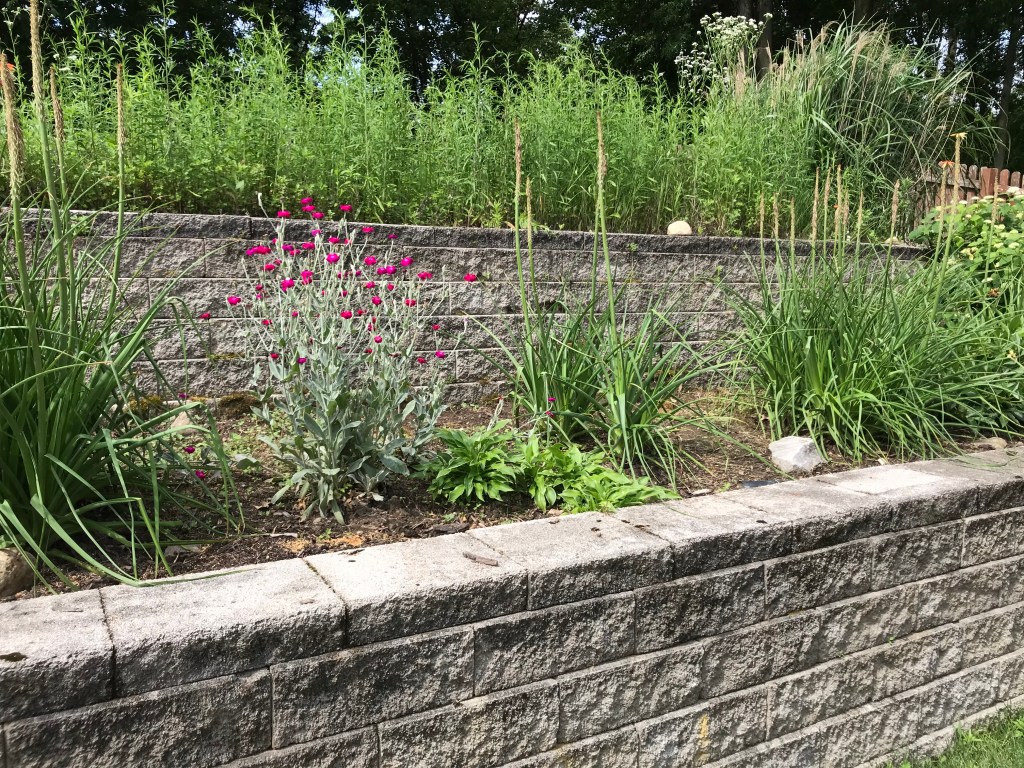
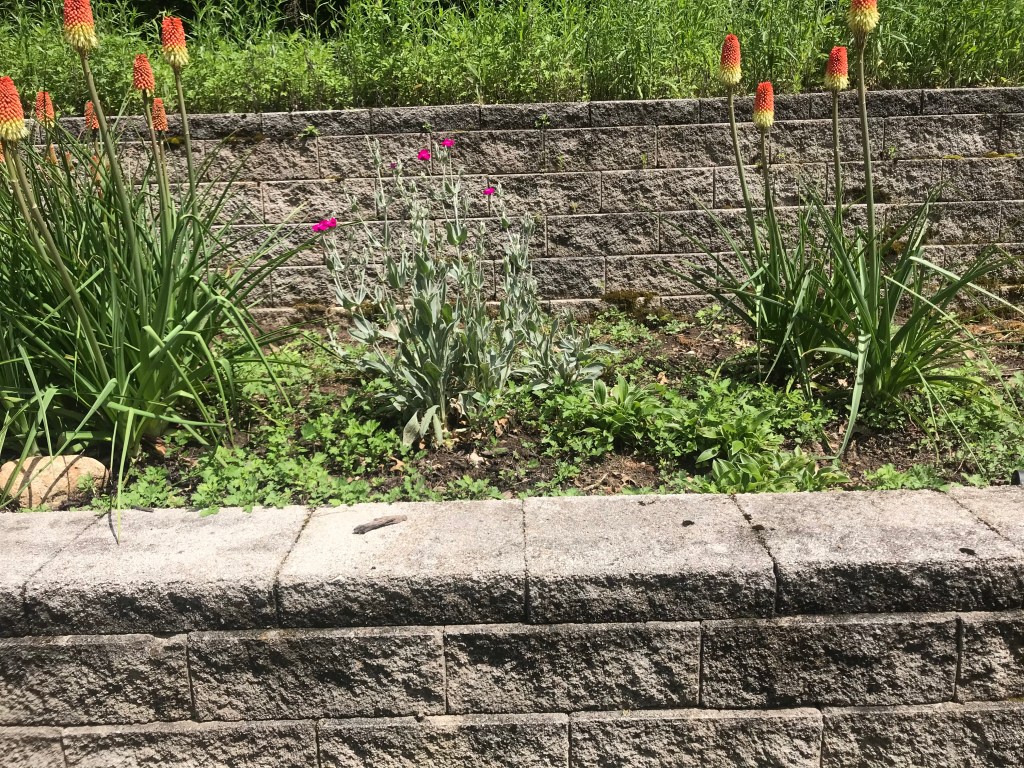
After about three days of work here is the result:

On day three, I was able to plant my herbs. I water them appropriately every other day and I’m about to do my second harvest soon!

Here is a picture of my herb garden starting out:

I planted chives, parsley, basil, chamomile, lavender, thyme, honeydew sage, yellow sage and rosemary together in the bed. I planed my mint separately because I heard it grows very fast, and I’m glad I did because after two days it started spreading!

Next year I will plant my chamomile in a separate container with a tomato stand (it gets very bushy)!

After my gardening experience this year, I think I’m ready to start planning to do a vegetable and herb garden for next year.

Let me know in the comments if you want me to share tips about how I dry/store my herbs! Make sure to follow my blog for more content related to mental health, eczema and fitness.

How to Make and Manage a Garden with Eczema (Part 1)

With the COVID-19 outbreak being so impactful on my life, it has been difficult finding the will to write anything. Heck, it’s been hard to DO anything except bingeing Netflix and Hulu and eat comfort food.

However, my husband and I looked at our yard this past weekend and it really needed some love, so we decided to finally get out of the house and into the sunshine to work on our lawn and prep for a garden!

This wasn’t an easy task because when we bought the house the previous owners gave up keeping up with the yard, especially the garden beds. I tried to tackle it last summer, but it was too much to handle, especially since I was just diagnosed with eczema a few months prior.

Eczema never fully goes away, so this is still a big problem for me, but I’m not going to let my eczema stop my goal of having an herb garden this summer, and neither should you!

So you can stay up-to-date with this experience, I decided to make a multi-part series about my journey of creating and managing a garden with my eczema .

This first part will be about what you may need, what I do to prep my hands and feet before I start and the transformation of my front lawn, so later this spring I can plant some pretty flowers!

Here is what my garden looked like when I started:

What you will need is a…

  1. A good lotion- Make sure you have a lotion that works well for you. We don’t want your hands or body to dry out!
  2. A set of sturdy gloves- This will protect your dry hands from the dirt and hopefully cause less irritation. However, if you feel like your hands are getting too sweaty, take them off!! This could cause inflammation!
  3. A water bottle- Drink at least 12-24 oz of water before you start. This will help prevent you from sweating less and prevent inflammation.

Here is what I did about 30 minutes before I started working…

  1. I washed my hands and feet very well
  2. I lotion them (I’ve been using Eucerin’s Eczema Relief lotion and it’s been working out pretty good!)
  3. I immediately put socks on my feet directly after lotioning
  4. I drank 24 oz of water

I will say, these steps seems super obvious, but really they can be easy to forget and it made a huge difference. My eczema never got irritated or triggered and it honestly felt good to get some work done without my hands burning or red!

Here is what my garden looked like when I finished:

I’m so proud of my results! Please stay safe and healthy during this pandemic and try to find the joy in the small things.

Follow my blog so you can see how I continue to maintain and manage my yard and how I began my herb garden.

How Stress Affects Eczema: Infographic

Header: Eczema and Stress. Some startling facts about how closely stress is connected to eczema

As I have mentioned countless of times, stress and anxiety are common triggers for eczema, according to the National Eczema Association. My eczema is triggered, or worsened, by stress, which is why this topic is so important to me.

I know I’m not the only one with this problem out of the 35 million Americans who suffer with eczema, so I decided to create an infographic that briefly explains how stress impacts eczema.

I hope this can be a good resource for those who have trouble managing their eczema or those who know people with eczema.

Here we go!

Thank you so much for your support! Share this to those who might need it and give me a follow for more content related to eczema!

Sources:

National Eczema Association, WebMD, WebMd News, Neosporin, Stress.org, Pinterest, Soine Dermatology

How Meditation Helped my Eczema

Title: Eczema and Meditation.
My journey of using meditation to prevent triggering my eczema.

I never thought I would try meditation, until I figured out all of my autoimmune disorders are triggered by stress, including my eczema. I’m not entirely sure why I’m over-stressed, but. whatever the case may be, I realized quickly that I need to take care of my mental health if I ever want my eczema to heal.

This is why meditation sounded appealing to me. Meditation has many positive benefits, especially for those who are over-stressed or anxious (it also helps that I get free Headspace as a partner at Starbucks).

I was also a little excited to force myself to save 10 minutes of my time and not focus on whatever was going on in my life. My meditation journey has not been perfect, but I try my best to incorporate when I can!

Woman in a seated position meditating in nature

Here are the times I try incorporate meditation into my routine:

  • When I need to fall asleep (or back asleep)
  • When doing chores
  • Before or after work

Here are specific things I use on Headspace when I meditate:

  • Soundscapes (I prefer the forest or nature-themed soundscapes)
  • Stress centered meditation sessions
  • Night-time Wind downs
  • The basics (usually for about 5 to 10 minutes)

I also turned on my notifications for Headspace to set up an alarm for the time(s) I’d like to meditate and an alarm to remind me to go to bed at a certain time if I want eight hours of sleep.

Again, I get the premium version for free since I work at Starbucks and I know not everyone can afford to pay $13 a month for an app. You should be able to try Headspace for free for one week, but if that’s not an option for you here are some other free options I have tried and liked:

  • Atmosphere- This is a soundscape app that allows you to create your own soundscape to fall asleep to!
  • Simple Habit- This app has a good amount of free 5 minute meditation sessions and you can choose what types of mediation sessions you’d like to have (stress reducing, boosting mood, etc.).
  • Calm- This is a free meditation app that gives you limited access for free to daily meditation sessions! A premium subscription is available.
  • Breethe- Another free meditation app that gives you limited access for free to daily meditation sessions! A premium subscription is available.

I work 40 hours a week and go to school full-time, so I understand how hard it can be do add more things to your schedule when it feels like the “to-do” pile is more than enough. However, by incorporating meditation into my routine, I can worry less about the small things and focus on the bigger picture.

Pebbles stacked on top of each other

Since I stared my meditating, my eczema flare-ups aren’t as frequent and aggravated. Along with yoga and my diet changes, my eczema has never been better! I can finally have a flare-up that doesn’t make my hands or feet bleed from writing my name or walking to the mailbox!

I’m still making sure that I apply lotion and try not to use harsh chemicals often; however, I will say that meditation has helped improve my eczema a lot!

Have you tried incorporating meditation into your routine? What app do you use? Leave a comment to share your thoughts!

I Went (Mostly) Gluten-free and Dairy-free to Help my Eczema

Blog Banner. Various Fruits with Heading "Gluten-free and Dairy-free.  How these changes have impacted my eczema."

I have tried many different solutions for my eczema. From steroid creams to special lotions to prescription medications, it just seemed like nothing was truly working for me. I finally decided enough was enough and I researched multiple holistic approaches to combat my eczema symptoms and triggers.

I have already shared with you how I have incorporated yoga into my routine to help my eczema; however, this is how I discovered a different solution to change my body from the inside.

How I Discovered this Technique

While I was researching, I found two articles from the National Eczema Association (NEA). I really trust the NEA as a source for most of my research about eczema because they are a non-profit and use reliable scientific studies to back their claims.

One article from the NEA explained how cutting out gluten could help manage symptoms of atopic dermatitis, or eczema. I will say that this article did disclaim that results vary by the person and that a gluten-free diet is more successful for those who have severe eczema. Despite my eczema not being severe, I was curious about this diet due to the lack of solutions for my problem.

After digging in a little more I found another article from the NEA, this time digging more into inflammatory foods. This is when I discovered that gluten and dairy are both considered inflammatory foods. The article doesn’t mention the link to eczema; however, I didn’t realize that there were multiple health risks with eating these types of foods and how it linked to greater inflammation in overweight women, like myself.

I thought to myself, “Let’s go ahead and try it! I mean, how hard could it really be?”

The Struggle of Implementation

Turns out, it is very hard when you love pasta, your husband loves red meat and you’re on a budget, but gluten-free and dairy-free alternatives more expensive!

Rotini pasta noodles

It also doesn’t help that working between part-time at Starbucks and my internship, it is just easier for me to pick up some fast food or make some ramen as a quick meal! Also, Starbucks doesn’t have many gluten-free and dairy-free options, so it severely limits what food I can eat on my break .

I knew I couldn’t go all in on this diet, but I could go about 80 percent with the support of Damek, my husband. Together, we created many grocery lists and found ways to incorporate gluten-free and dairy-free options into our favorite meals.

My New Diet

Like I said, I didn’t go completely gluten-free or dairy-free, but I did cut out a lot of things from my diet. However, ere are some things I completely cut out of my diet:

Four ice cream pops side by side
  • All Bread
  • Crackers
  • Cow’s Milk
  • Yogurt
  • Ice Cream
  • Wheat Pasta
  • Ramen
  • Pretzels
  • Granola Bars

Some things I still included were:

  • Gluten-free Pasta (Twice a week because there are usually leftovers)
  • Steak (Once a week)
  • A Small PB&J Sandwich (From a Starbucks protein box about twice a week)
  • Butter
  • Cheese
  • Ranch
  • Eggs (Hardboiled or egg bites from Starbucks)

Some things I started to include more are:

Zoomed in blackberries, raspberries and blueberries
  • Fruit (Mainly raspberries, apples and clementines)
  • Veggies (Cucumber, carrots, corn, green beans and romaine salad)
  • Potatoes
  • Pork
  • Oats (Oatmeal)
  • Hippeas Snack Puffs
  • Banana Chips

Now, to give you some perspective, here is what I’d usually eat in a day:

Breakfast- Overnight oats with raspberries (Will include a recipe in a future post!) and two clementines

A bowl of oatmeal with blueberries

Lunch- Gluten-free pasta with vodka sauce and cucumbers and carrots with ranch

Snacks- Banana chips and a Luna bar (Usually a fruity flavor)

Dinner- Pork chops with barbecue sauce, au gratin potatoes and green beans

The Outcome

After trying this diet for about 2 months, I have seen a difference in my daily eczema symptoms. My hands and feet have been less puffy. I have also seen a decrease in redness in spots where my eczema occurs. However, this didn’t prevent my eczema from triggering and I do still get flare-ups daily.

Overall, I am satisfied that I saw some of my symptoms get relieved and I will probably continue this diet. This diet has encouraged me to eat generally healthier since I have had cut out a lot of fast food.

As an ending note, please do not drastically change your diet without consulting a health professional. I am not a health expert and I simply just wanted to share my experience and my results.

For more information about how foods that can potentially trigger eczema, here are two sources I didn’t mention, but were also helpful.

  1. https://www.verywellhealth.com/gluten-and-eczema-562614
  2. https://www.medicalnewstoday.com/articles/320855#outlook

I don’t follow a complete inflammatory diet, but I’d love it if you liked this post and left a comment so I can hear your stories and your thoughts on this subject.

5 Yoga Poses that Help Manage my Eczema: Yoga-tta Be Kidding Me!

Blog Banner. Silhouette of a person sitting with crossed legs.

Now I know you’re probably wondering, “Jade, how will yoga help with my eczema? It’s hard to even do my daily tasks! How am I supposed to do yoga when I have eczema?”

Well, stress and anxiety are common triggers for eczema, according to the National Eczema Association. I know my eczema is one of my many autoimmune disorders, all of which are triggered, or worsened, by stress.

I decided to try many different tactics to try and manage my stress and my eczema. I have found that when I incorporate yoga into my routine, I feel less stress and, overall, I get less eczema break-outs!

Yoga is well-known for being a form of exercise that helps reduce stress. I actually wrote an article in the Kent Stater about how yoga helps with stress and anxiety!

Since I have eczema on my hands, fingers and feet, it can be challenging to find any motivation to exercise. Through yoga, I’m now able to incorporate some mild exercise in my weekly routine.

The poses I have chosen today are friendly for those who have eczema anywhere on their body. However, please make sure you lotion any areas you have eczema before you start your yoga practice and feel free to wear socks. We don’t want dry skin all over our yoga mat!

Without further ado, here are five poses I recommend for those who have eczema:

Child’s Pose

Personally, child’s pose is one of my favorite yoga poses. It’s easy on the body for those with eczema and you can always deepen the pose by extending your arms! I like using this pose to start my routine. Finally, it’s good for reducing stress because it’s a great pose to control your breath and be aware of your body.

Child's Pose

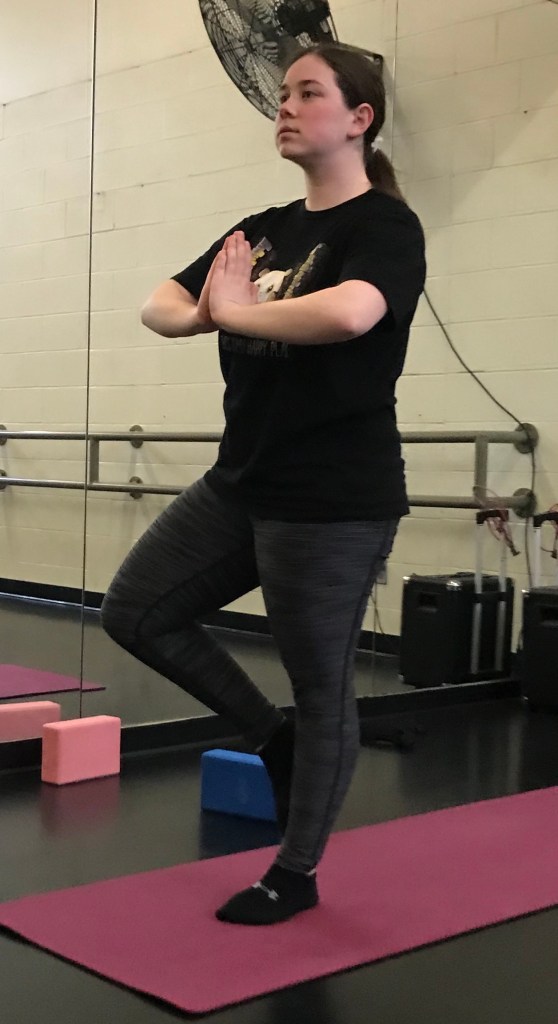
Tree Pose

Tree Pose

Tree pose may seem scary for those with eczema on your feet; however, learning to balance on my feet through this pose has helped my eczema when I’m eventually on my feet for my job! I take my pose with my foot on my calf, but feel free to go the extra mile if you feel comfortable! You can also take this time to keep focusing on your breath.

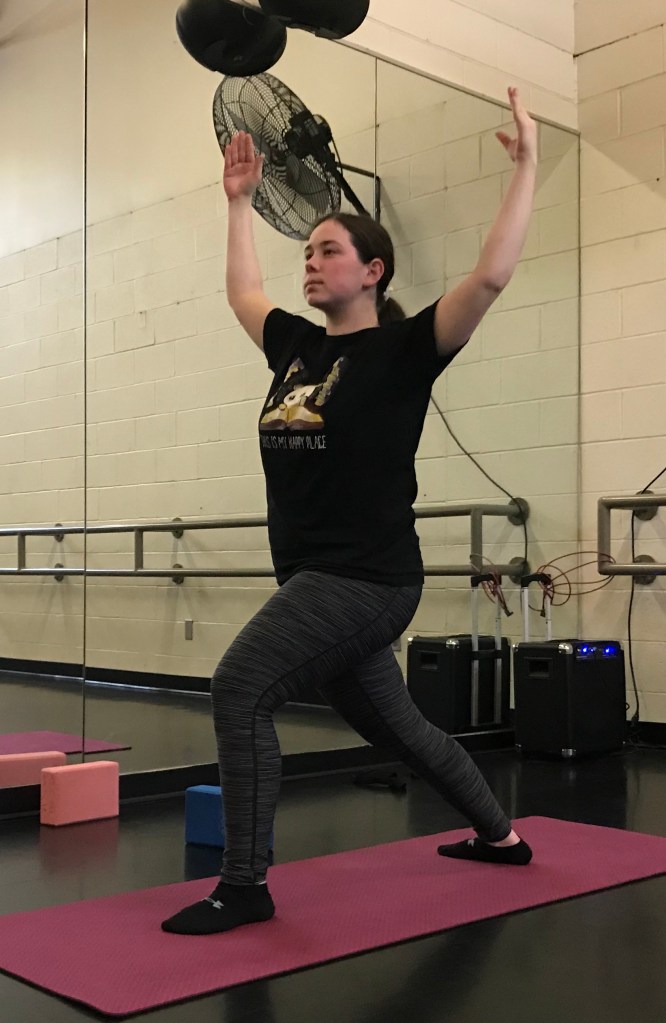
Warrior 1

Warrior One Pose

Warrior one is a great yoga pose for me with my eczema because it is a great way to stretch the muscles in the arms and legs, without feeling any pain in my hands or feet. I also find it easy to relax and concentrate on my body in this pose.

Warrior 2

Warrior Two Pose

Warrior two is very similar to warrior one! Easy peasy! This pose also helps stretches the hips after transitioning from warrior one. Again, use this pose to stretch the muscles and concentrate on how you’re feeling.

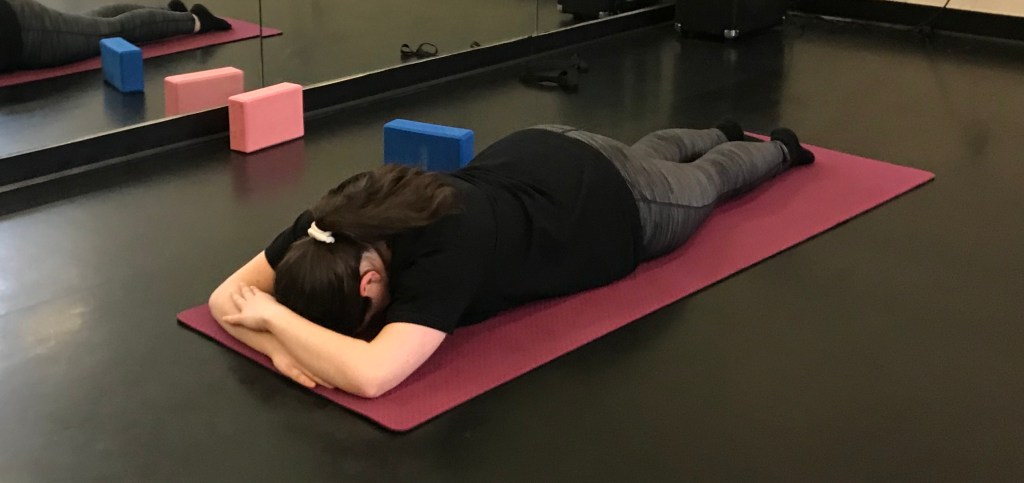
Crocodile

Last, but not least, crocodile is very good pose to end your routine on! Crocodile pose helps with breath control because you can feel your stomach press against the floor, which can help reduce stress. Obviously, you are off your hands and feet in this pose, hence why I like transitioning from this pose to savasana, or corpse pose.

Crocodile Pose

Overall, I have really enjoyed incorporating yoga into my weekly routine. It has been interesting experience, but through trial and error I have found that these poses have helped me overall manage my eczema and my stress the best. These poses allow you to control your breath and focus your mind on your body. These are poses you can easily incorporate into your weekly routine, even if it’s just for a few minutes!

Do you plan on trying these poses at home? If so, f so, leave a comment and tell me how it went.